
While exploring Bali, you may unexpectedly encounter one of the island's most remarkable cultural traditions: a Ngaben, or Balinese cremation ceremony. Unlike funerals in many parts of the world, Ngaben is not primarily a somber occasion. Instead, it is a profound celebration of life, transformation, and the soul's journey toward rebirth. For Balinese Hindus, death is viewed as a transition rather than an ending. The soul is believed to continue its journey through a cycle of reincarnation, and Ngaben plays a vital role in helping the deceased move peacefully into the next stage of existence. Through this sacred ritual, the physical body is returned to the universe while the soul is liberated from earthly ties.
A Community Effort
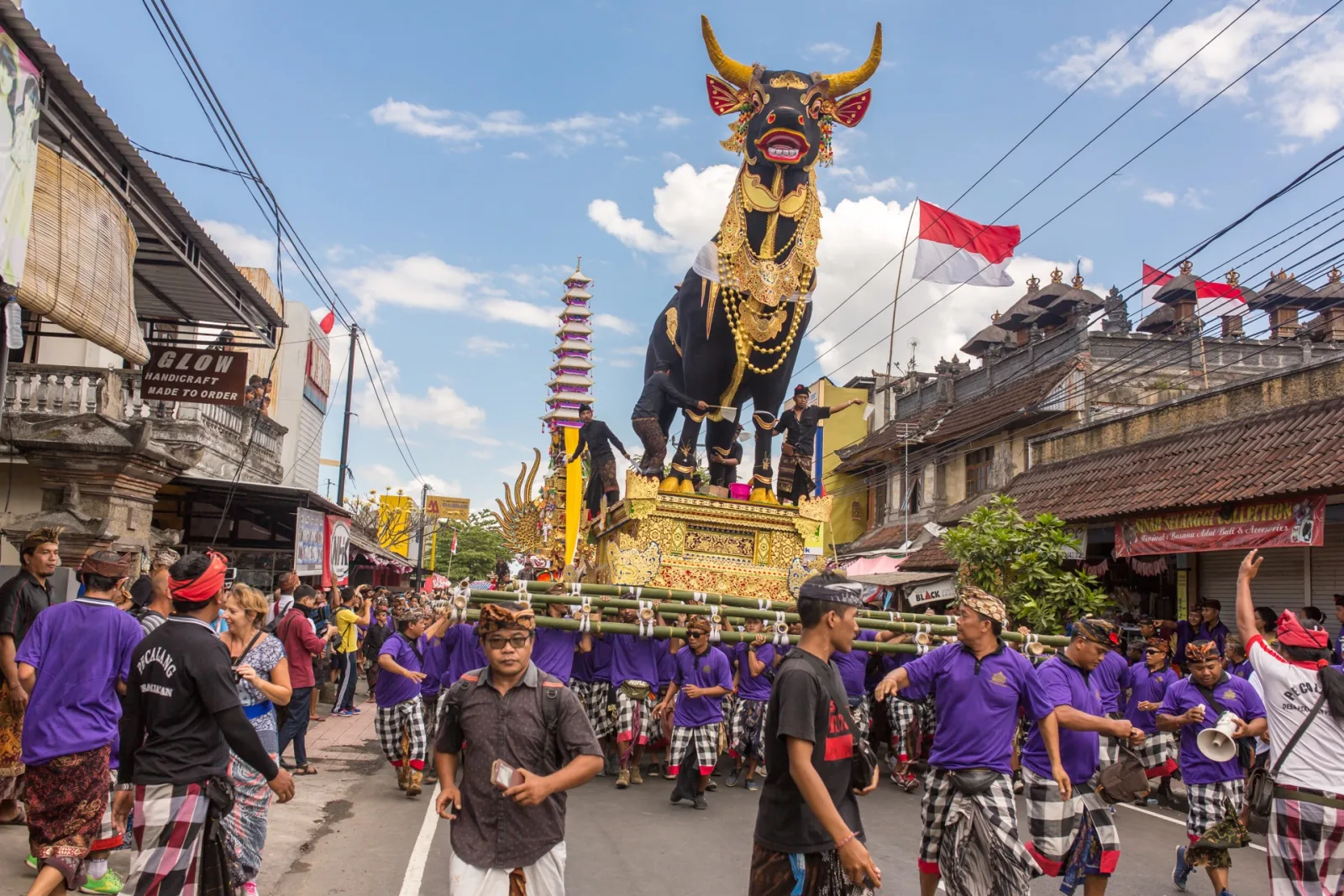
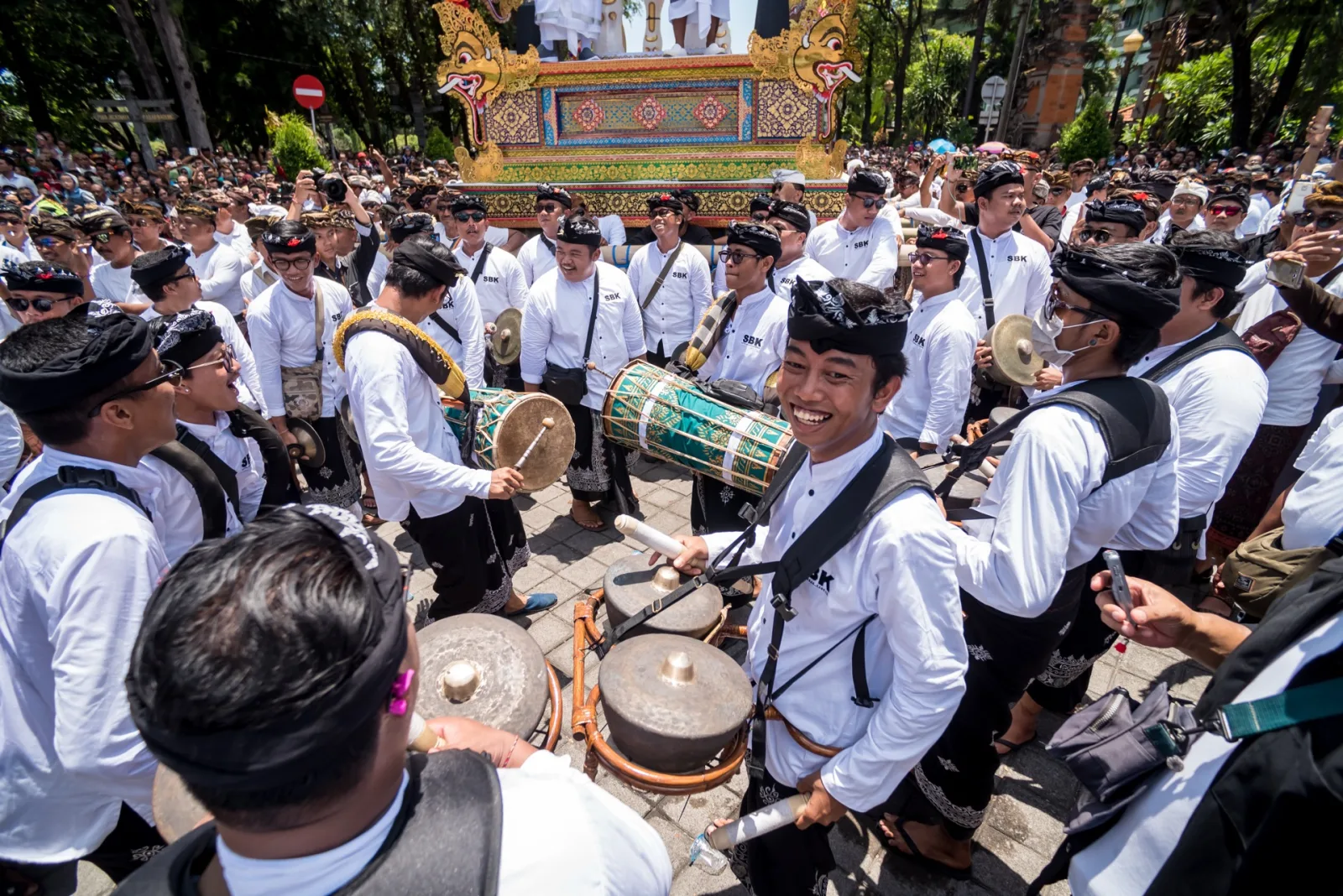
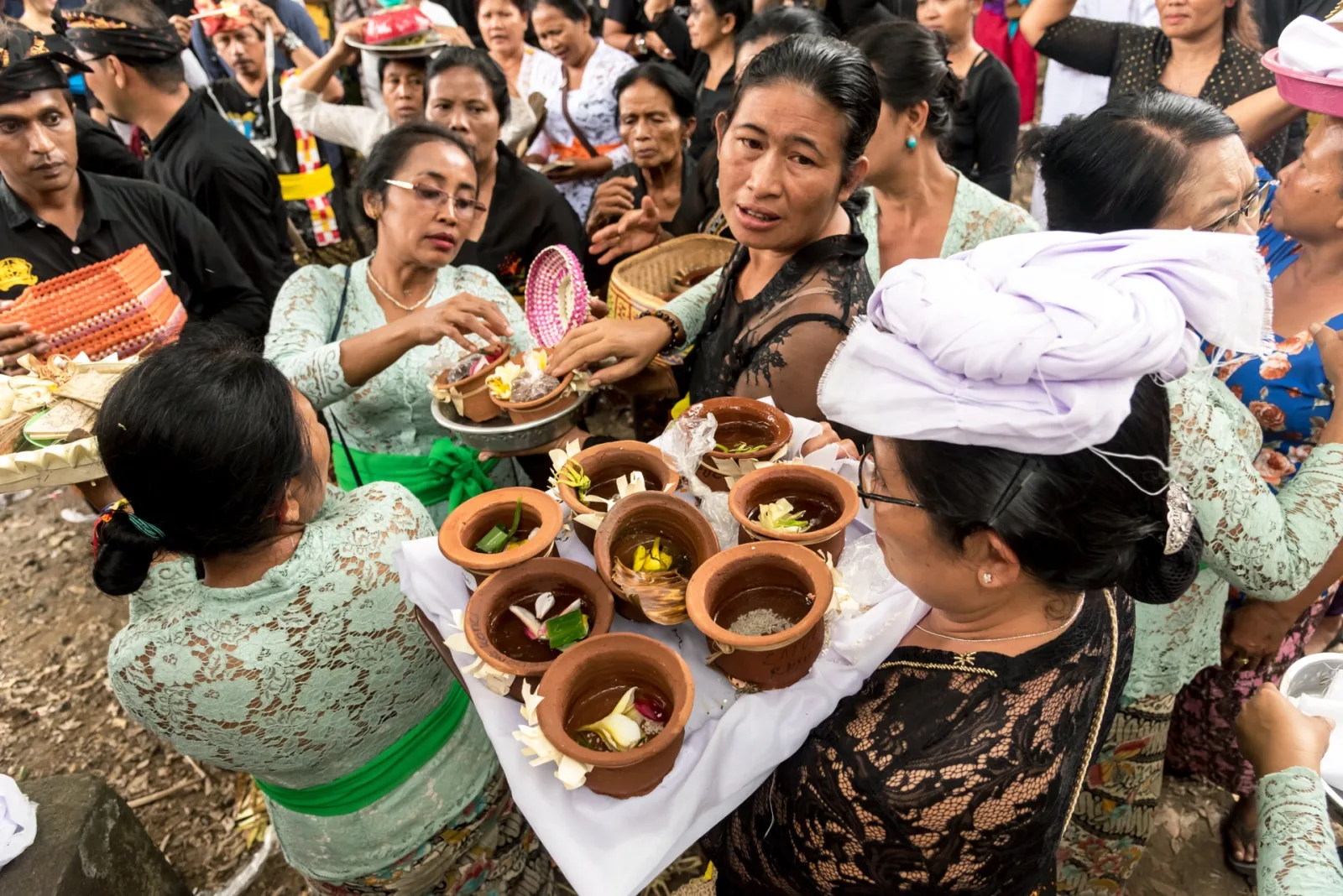
When a person passes away, preparations for Ngaben can begin immediately or months, even years, later depending on the family's circumstances. Because the ceremony can be expensive, families often work together with their local banjar (community organization) to organize the event. The entire village may participate in preparing offerings, constructing ceremonial structures, collecting holy water, arranging traditional music performances, and organizing religious rituals. Ngaben is not simply a family event; it is a collective expression of community, faith, and mutual support.
The Spectacular Procession
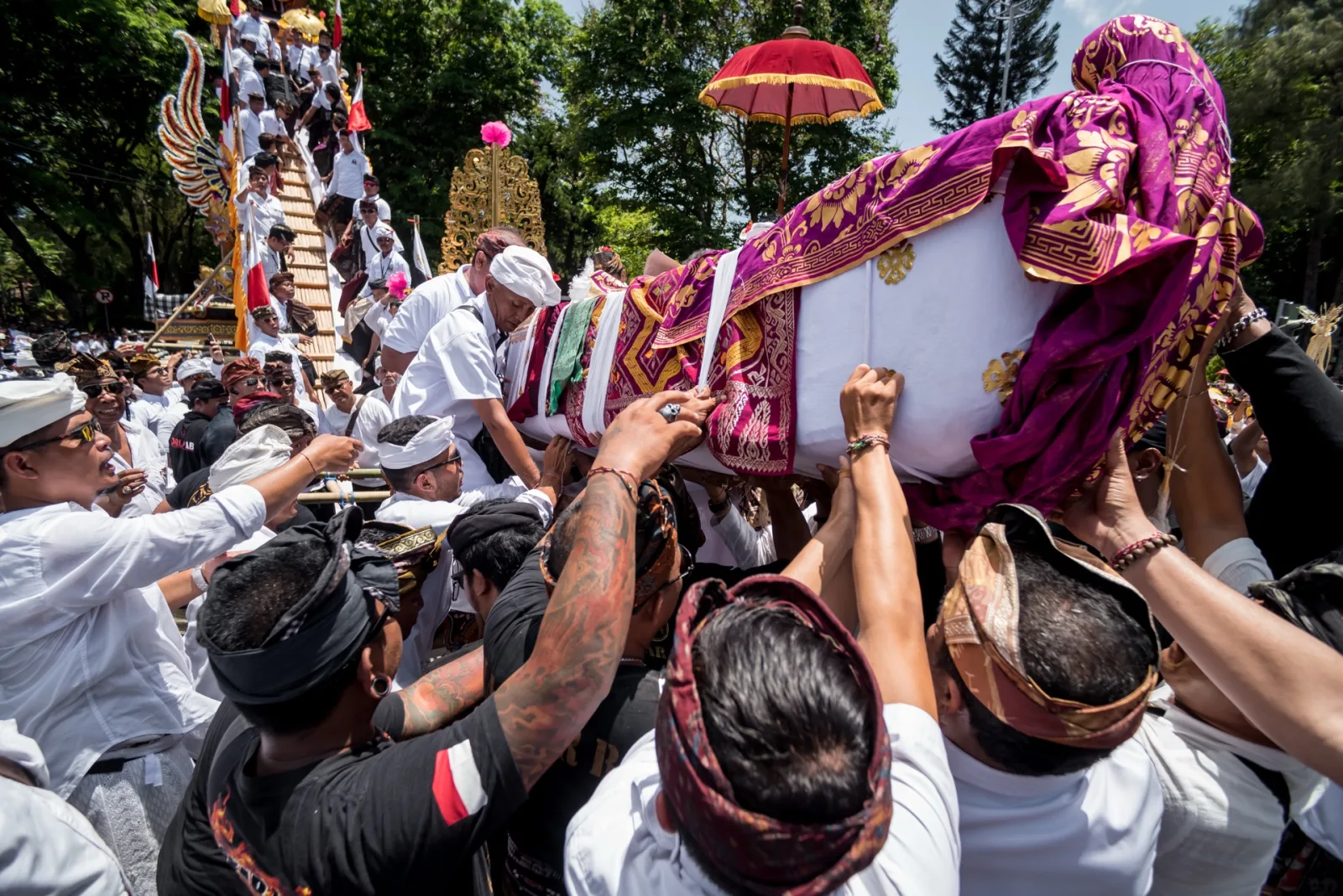
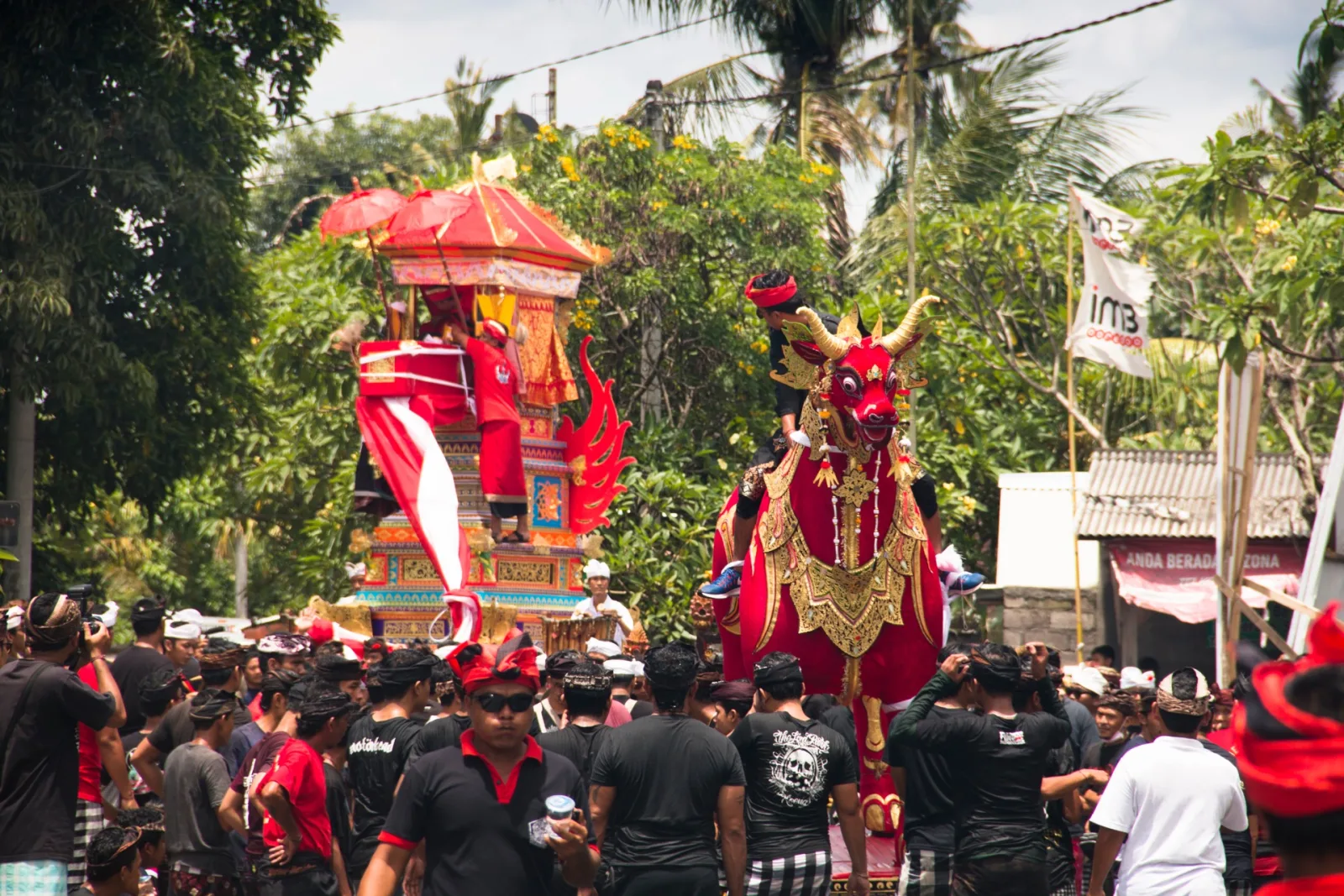
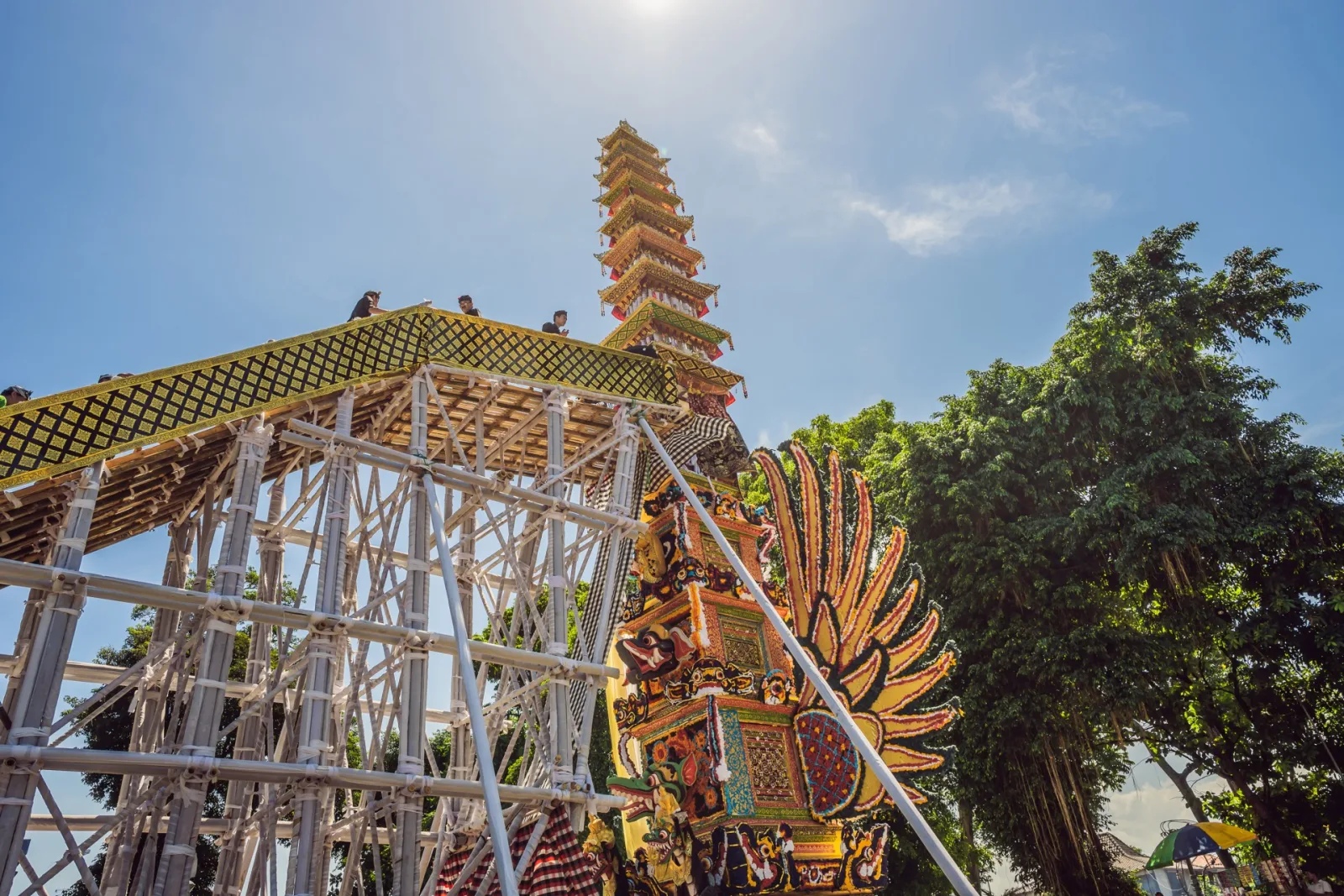
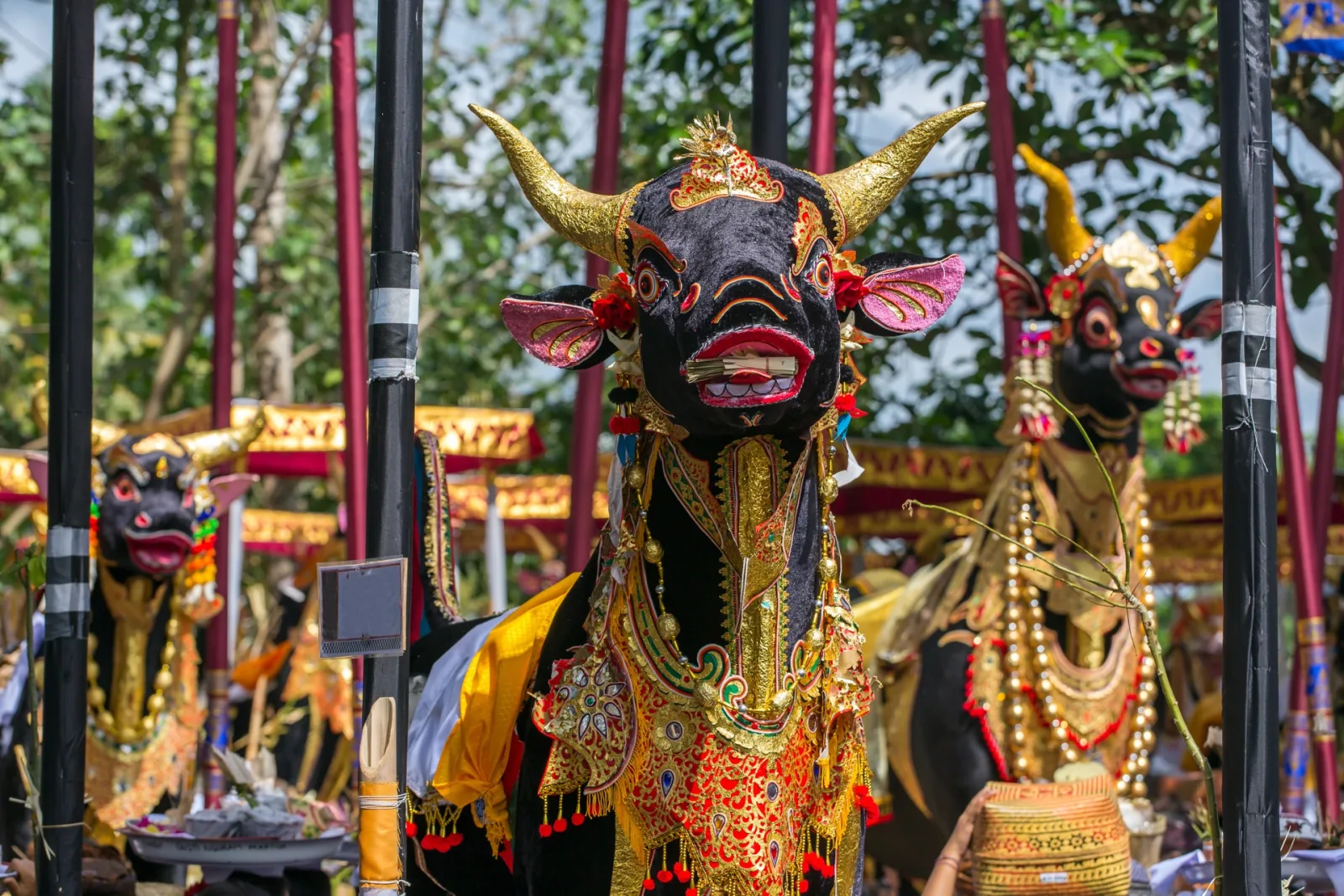
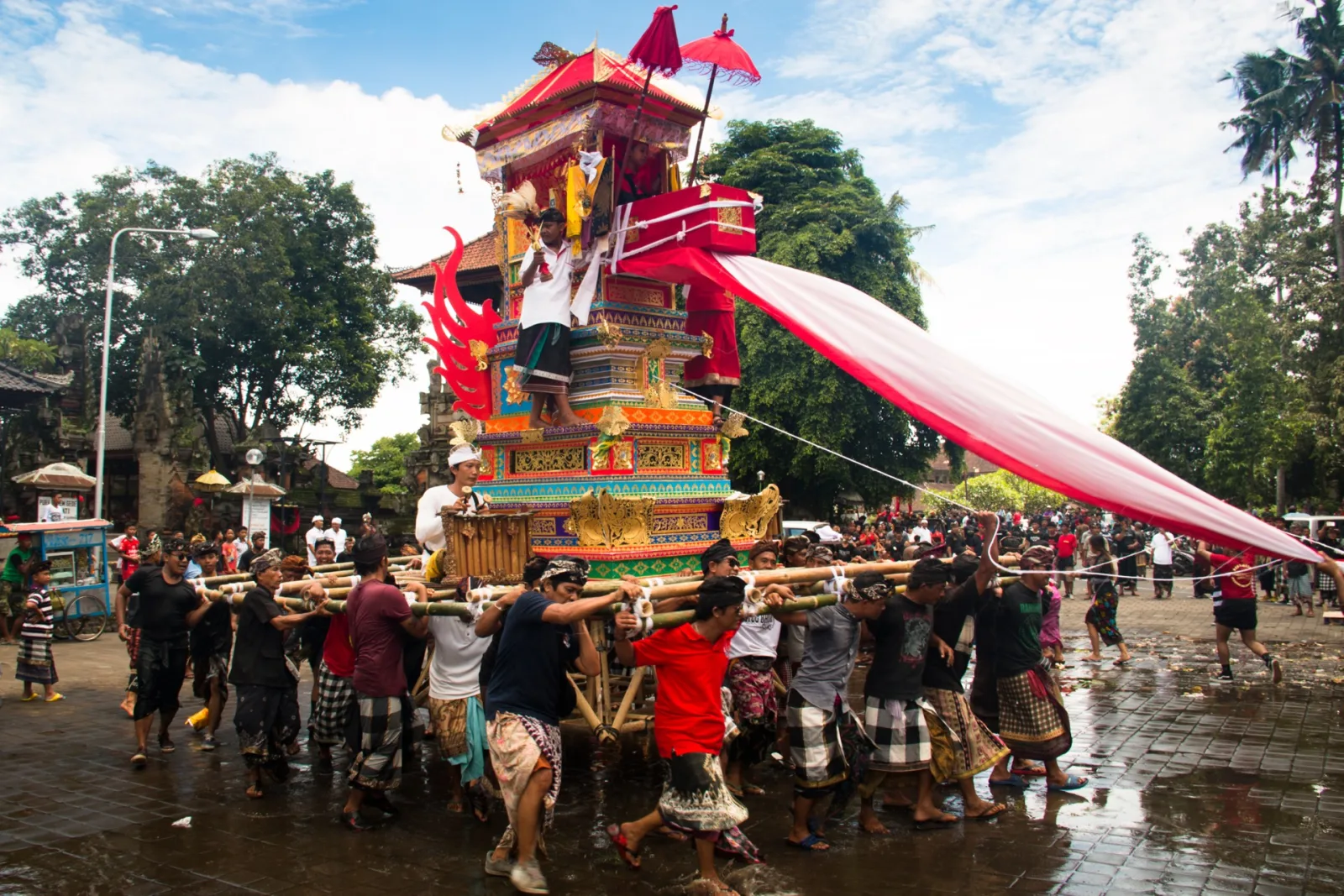
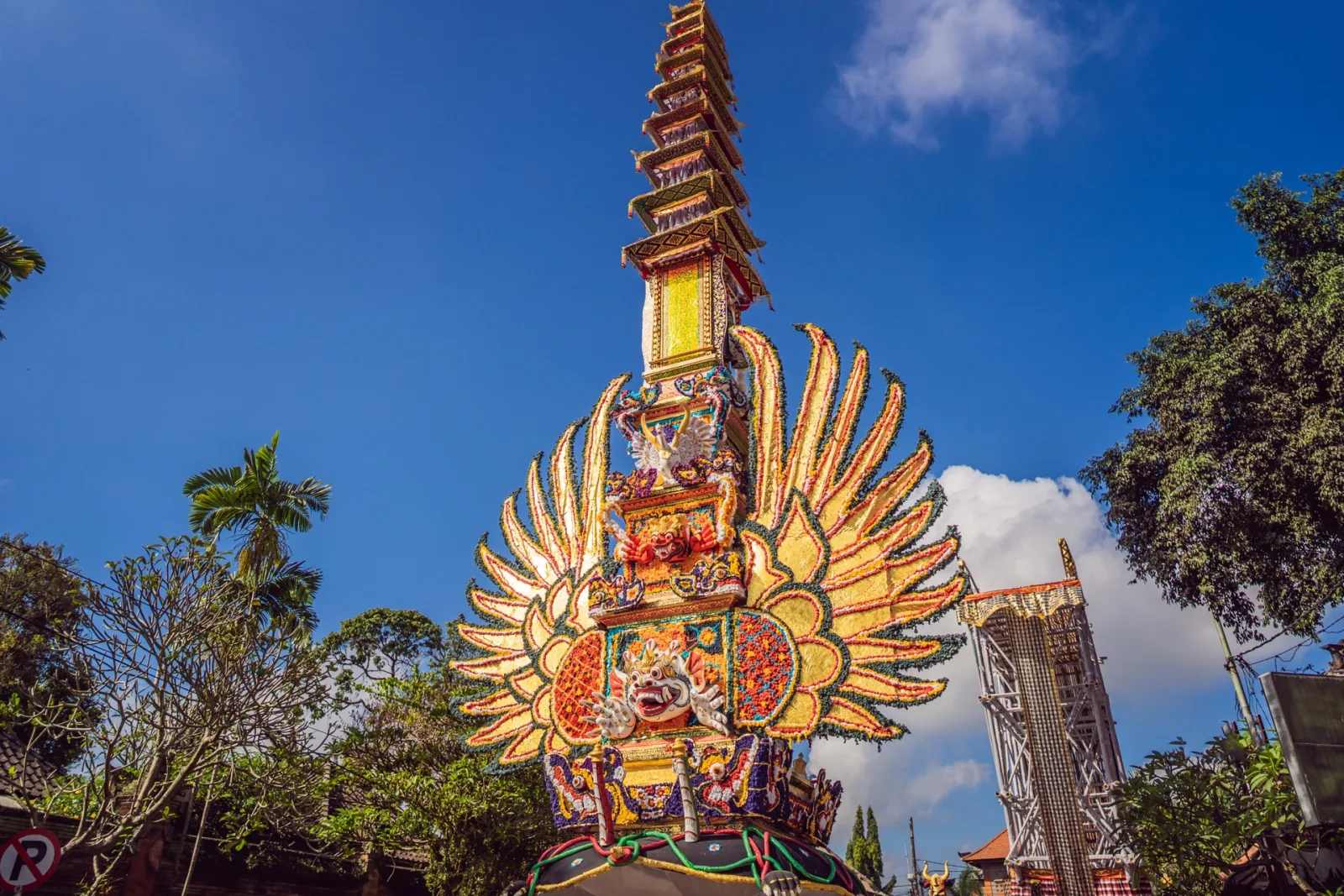
One of the most striking elements of Ngaben is the funeral procession. The body is carried from the family home to the cremation grounds inside an elaborate cremation tower known as a bade. Depending on family status and local traditions, the tower can reach impressive heights and is often decorated with colorful fabrics, ornaments, mirrors, and intricate carvings. A sarcophagus, often shaped like a sacred animal such as a bull (lembu), is also prepared. The deceased will ultimately be placed inside this structure before cremation. As the procession moves through the village, villagers carry the towering structures on bamboo platforms while accompanied by the energetic sounds of a gamelan orchestra. The carriers intentionally spin and rotate the tower at intersections, a symbolic act believed to confuse the spirit and prevent it from finding its way back home. Far from being silent, the atmosphere is vibrant, emotional, and full of life. It reflects the Balinese belief that the soul should be released with dignity, joy, and positive energy.
Returning to the Five Elements
- Pertiwi (Earth)
- Apah (Water)
- Teja (Fire)
- Bayu (Air/Wind)
- Akasa (Ether/Space)
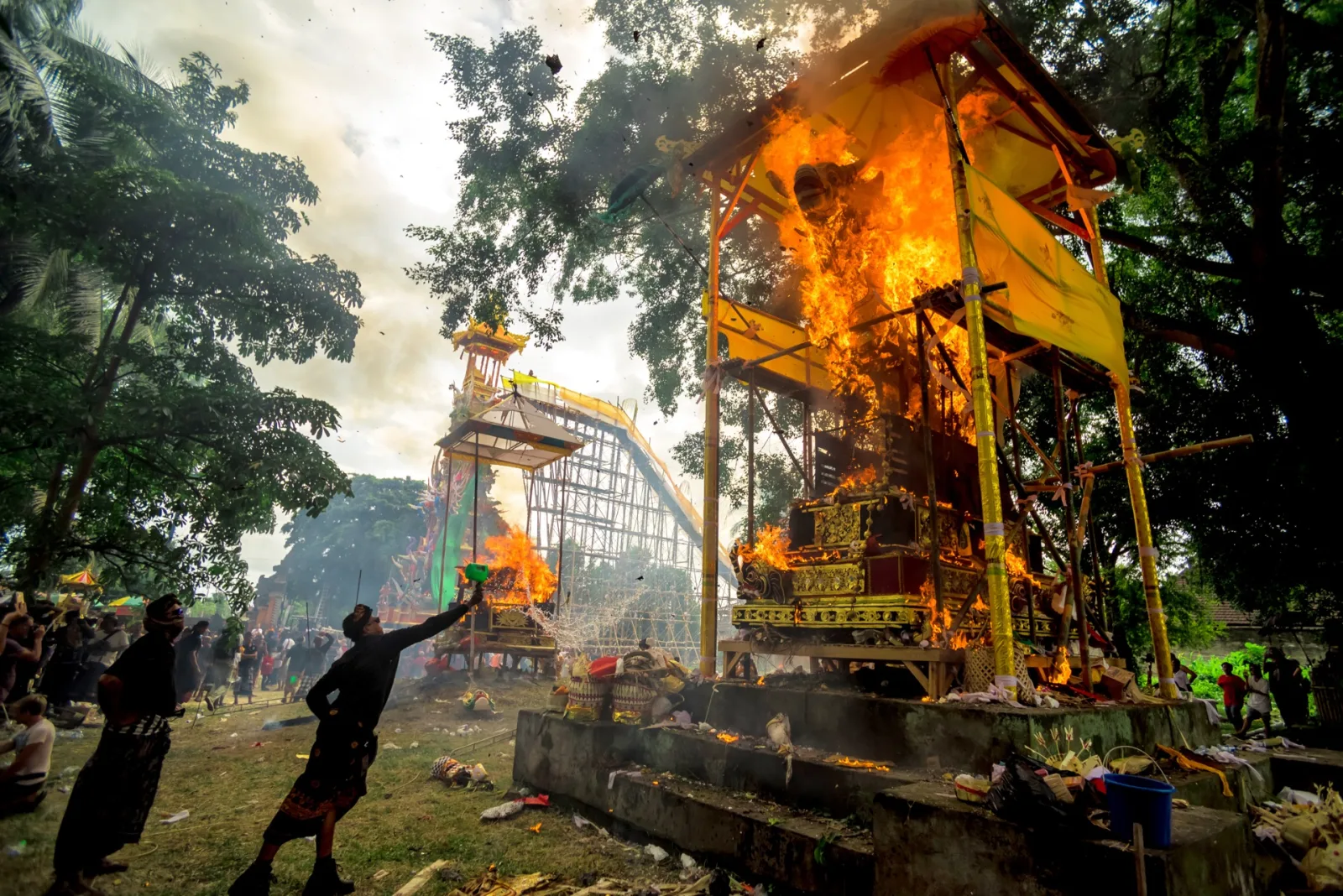
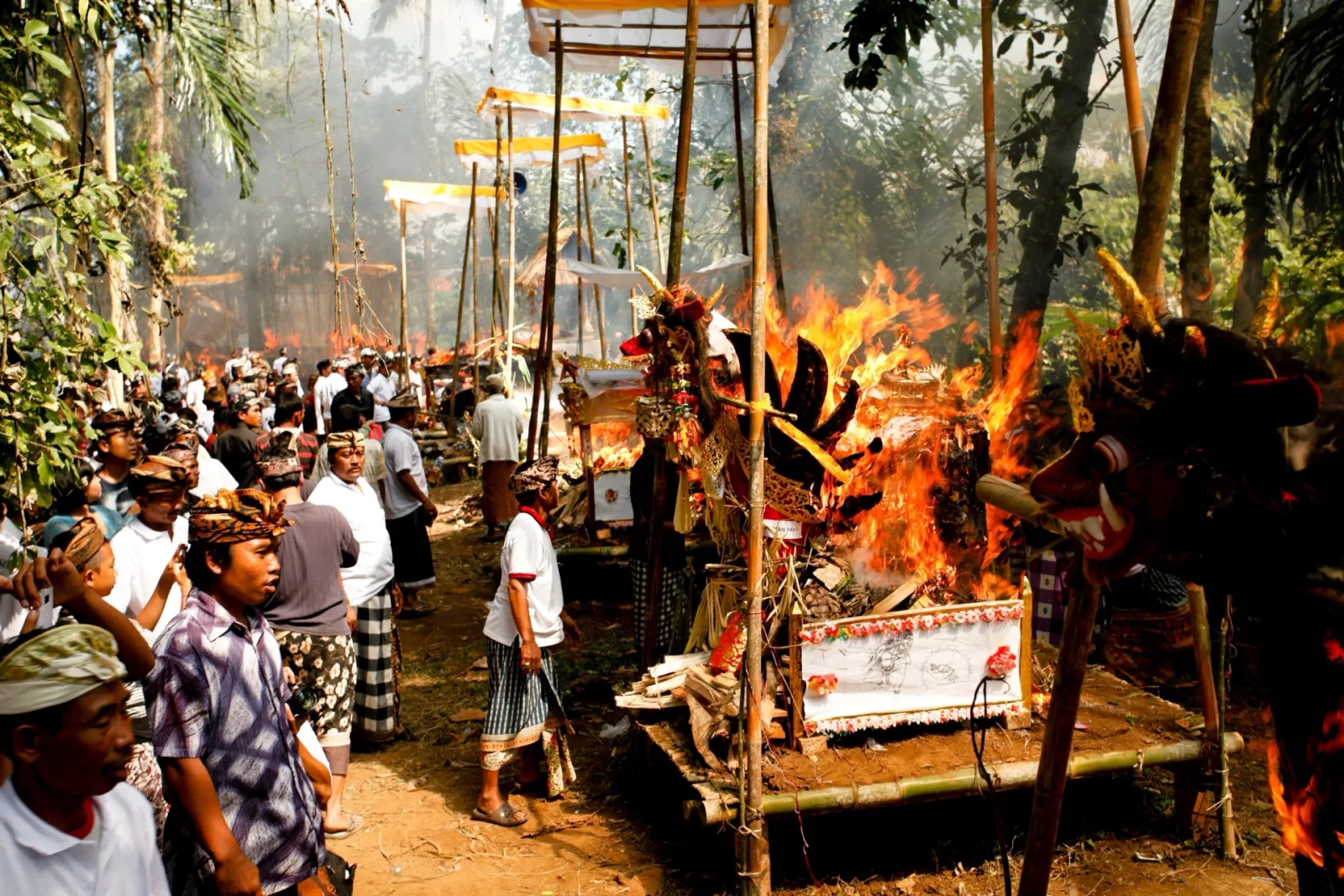
The cremation fire symbolizes the return of these elements to the universe. It is considered a purification process that frees the soul from the physical world and allows it to continue its spiritual journey.
Collective Cremations
Not every family can afford an individual Ngaben. For this reason, many villages organize mass cremation ceremonies known as Ngaben Massal. In these events, multiple families share the costs and preparations, allowing everyone to fulfill their religious obligations. These communal ceremonies are often even more spectacular, involving dozens of cremation towers, hundreds of participants, and an extraordinary display of Balinese culture and spirituality.
What Visitors Should Know
If you happen to witness a Ngaben during your travels in Bali, consider it a rare privilege. Visitors are generally welcome to observe respectfully, provided they follow local customs.
A few simple guidelines:
- Dress modestly and respectfully.
- Avoid standing in the path of the procession.
- Ask permission before taking close-up photographs of participants.
- Remain mindful that, despite the festive atmosphere, this is still a sacred religious ceremony.
Ngaben offers a fascinating glimpse into the Balinese worldview, where life, death, and rebirth are interconnected parts of an endless spiritual journey. It is a powerful reminder that in Bali, even farewell can be transformed into a celebration of life, community, and the eternal cycle of existence.